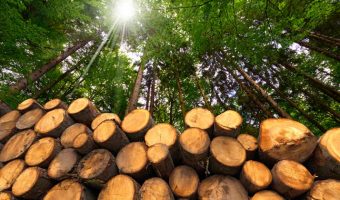
The timber industry, with all its economic and social benefits, requires diligent conservation efforts in order to ensure its thriving sustainability. In this post, we’ll first define what sustainable forestry management is, and then we’ll briefly explore some practices contributing to sustainable timber production, since the logging industry holds the most realistic potential for providing enduring economic support of forestry management in the decades to come. We will also examine the different stakeholders’ roles and some implementation challenges affecting the logging industry.

Sustainable Forestry Management
Sustainable Forestry Management (SFM) refers to the administration and utilization of forest lands in a way that maintains their biodiversity, productivity, regeneration capacity, vitality, and their potential to fulfill relevant ecological, economic, and social functions at local, national, and global levels now as well as long into the future.

The main objectives of sustainable forestry management include:
Conservation of biodiversity: This involves protecting both the variety of species and the habitats where they are found.
Climate change mitigation: Forests act as carbon sinks, absorbing CO2 that would otherwise remain in the atmosphere. Healthy, growing forests may hold the potential to help decrease atmospheric CO2.

Sustainable yield of timber products: This means harvesting trees in a way that allows the forest to easily regenerate, thus providing a reliable source of timber in the long term.
Preservation of forest health & vitality: This involves protecting forests from diseases, pests, and uncontrolled fires.
Socio-economic benefits: Forests provide jobs, raw materials, and contribute to local and national economies. Sustainable forestry ensures long-term availability of such benefits.

Maintenance and encouragement of local & traditional knowledge systems: Sustainable forestry respects the rights and interests of forest-dependent communities and indigenous peoples.
Sustainable forestry management is a balance of the needs for conservation, forest development & timber production while striving to ensure that future generations will have the resources and benefits which forests currently offer.
Let’s look now at how the lumber industry is incorporating sustainable practices as they harvest trees, manage forests, and plan for the future.

Sustainable Practices in the Timber Industry
Sustainable Forestry Management
As detailed above, Sustainable Forestry Management aims to retain the ecological vitality of forests while providing socio-economic benefits and conserving biodiversity.
Some guiding principles include:
- Controlled logging: Introducing controlled or selective logging instead of clearcutting helps to maintain the ecological balance.
- Reforestation: Ensuring that logged areas are quickly replanted, giving forests a chance to renew themselves.

Forestry Certification
Forestry certification programs such as the Forest Stewardship Council (FSC) and the Program for the Endorsement of Forest Certification (PEFC) encourage sustainable forestry. Such programs help provide assurances to consumers about responsible sourcing of timber products.

Stakeholders
National & Local Governments
From enforcing laws and regulations to funding research on sustainable practices, regional & national governments play a crucial role in timber sustainability. They can support certification schemes, provide incentives for sustainable forestry, and ensure proper law enforcement.

Non-Governmental Organizations (NGOs)
NGOs can influence timber sustainability through advocacy, monitoring, and support efforts. They can aid in educating the public, conducting research, or supporting communities through forestry programs.

Timber Industry Companies
Companies involved in harvesting the forests and producing wood products should prioritize sustainable supply chains, influencing the market towards fully relying on sustainably-sourced timber. Timber companies can also aid in efforts to educate the public regarding wise forestry management.

Challenges & Solutions
Economic Challenges
Maintaining sustainable forestry management practices while ensuring profitability can be tricky. Economic incentives can support businesses in aligning profitability with sustainability. If a particular forest fails to be able to produce revenue through careful lumber production, then inevitably that land may eventually find alternate purposes (such as being clear cut for animal pastureland), with deforestation gradually overtaking the land and little incentive to replant trees. It is key to maintain profitable logging practices while simultaneously planning for the future through investment in ongoing forest replacement.

Non-Compliance with Standards
Stakeholders may not always comply with sustainability standards due to lack of awareness, resources, or will. Regular audits of logging companies, penalties for non-compliance, and public awareness campaigns around wise logging practices can help mitigate this. Non-compliance is especially an ongoing issue in certain countries where government regulation and oversight are manipulated by bribing or organized crime. Developed countries should thoroughly research the origins of the lumber they are buying from other countries to ensure wise forestry practices are being implemented.

Coordination Failure
Lack of coordination among different sectors and stakeholders can hinder sustainable logging practices. Establishing clear communication channels throughout the entire lumber production chain and collaboratively working towards shared goals can help counter this challenge.

In this global age, the timber industry’s sustainability is pivotal to environmental conservation, economic progression, and societal development. With collective responsibility and active participation from all the different stakeholders involved, we can help to ensure the sustained productivity and vitality of our forests while reaping the many benefits that the timber industry continues to offer.
Editor Note: A; C.