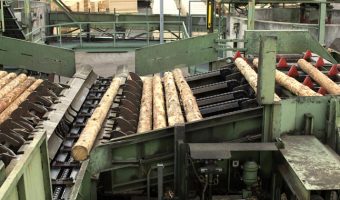
If you plan on using lumber for construction, you probably understand the importance of making sure the lumber is properly dried before starting your project. Lumber that isn’t dried correctly can lead to a whole host of problems, such as the appearance of large gaps between boards, discoloration, … [Read more...]
Looking for a Bargain on Quality Imported Wood? Consider Short Lumber

Most lumber customers in the United States have grown accustomed to their lumber boards to starting out at sizes that are no shorter than eight feet in length. Anything less than eight feet is considered to be a “short” board. The demand for these "under par" boards is incredibly low as many … [Read more...]
Now Taking Architectural Plywood Orders

Architectural plywood panels are the crème-de-la-crème, when it comes to plywood. With exceptionally stable cores and top-of-the-line face veneers, these panels require consistency in the face veneer that meets requirements of large projects such as conference centers or hotels. Sometimes customers … [Read more...]
Defining Terms: What “Quality Control” Means for Hardwoods, Part 2

In Part 1, we looked at what quality control means for exotic hardwoods up through the drying process. We truly believe that effective quality control begins at the source, as we evaluate the harvesting practices and overall reliability of each mill. Not only do we personally visit each mill with … [Read more...]
Plywood Problems: 3 Steps to Finding Perfect Plywood

In a previous post, we explained how more important than the number of plies in a sheet of plywood, the quality and application of glue helps determine the quality. It would be nice if all you had to do was ask about the formula of glue being used, and voila! You would know if you would be getting … [Read more...]
Defining Terms: What “Quality Control” Means for Hardwoods, Part 1
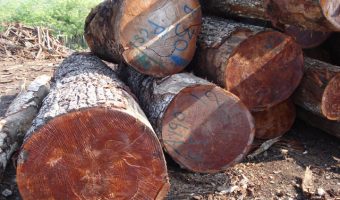
If there’s something we’re not ashamed to be obsessive about at J. Gibson McIlvain, it’s quality control. And it doesn’t start in our lumber yard; it starts where the lumber originates, at the source. Whether we’re sourcing domestic lumber or exotic lumber species from the other side of the world, … [Read more...]
Defining Terms: What “Quality” Means for Millwork

J. Gibson McIlvain specializes in creating a wide variety of architectural millwork. Because we have a fully functional in-house millworks operation, we have full control over the level of quality millwork we offer. In addition to those designs in our current catalog, we can also work from any … [Read more...]
Positives and Problems Surrounding Genuine Mahogany

The issues surrounding Genuine Mahogany may seem bleak, but they’re not without a silver lining. Between decreased availability and lower grade, the problems are quite disconcerting. At the same time, though, they are reversible — and, in the meantime, other options are available. In this article, … [Read more...]
Evaluating Proposed Grading Changes for Genuine Mahogany

The scenario for Genuine Mahogany definitely has its challenges, and those of us within the lumber industry have a responsibility to consider various solutions. Brainstorming is good. Ideas deserve to be considered. At the same time, though, we need to carefully evaluate each proposed change in … [Read more...]
Understanding Lumber Extractives & Color Change, Part 4
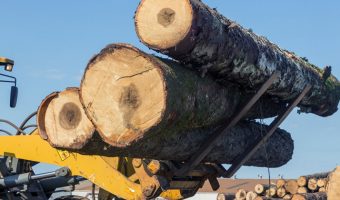
Do you have a love-hate relationship with the changing color of wood? Hopefully, as you grow in your understanding of what contributes to the color-change process, you’ll become less frustrated and more appreciative of this natural process — as well as able to intelligently plan for and accommodate … [Read more...]
What Tropical Hardwood Decking Is Not

When you purchase tropical hardwood decking, we realize that you’re making quite an investment. But you still need to make sure your expectations are in line with reality, and a big part of that is realizing that decking boards are not finished products. Sure, they may seem as if they are; after … [Read more...]
Understanding Lumber Extractives & Color Change, Part 3

From weeping sap (see Part 1) to oils and tannins (see Part 2), many extractives contribute to the changing colors of lumber — and the difficulty associated with so-called “color matching.” Whenever we’re dealing with organic products, the issue of natural variation comes up; but with lumber, it’s … [Read more...]
Defining Lumber Industry Terms: Marine-Grade Plywood, Part 2

If you were a little disappointed when you learned about the minimum standards of “marine-grade plywood” from Part 1, we hope this follow-up post will help equip you to take the extra steps necessary in order to confirm that the standards you require will be met by the marine-grade plywood that you … [Read more...]
Shifting Standards and Long-Term Effects

If anything is clear about the issues surrounding Genuine Mahogany, it’s that something has to give. While change is needed, not everyone agrees about what, exactly, needs to change. Not only short-term impact, but long-term effects of proposed solutions, need to be considered. Each affects Mahogany … [Read more...]
Re-evaluating the Bigger-Is-Better Mindset

A current trend in the lumber industry mirrors the general American ideology that encompasses almost everything except our perspectives regarding our physical bodies: The bigger, the better. People want wood that’s wider and longer than ever before. And it’s not just for those who actually want to … [Read more...]
Distinguishing Among Mahoganies

In the wake of Genuine Mahogany’s decreased availability and quality, many customers are looking for alternatives. African Mahogany has long been considered a viable alternative, but it’s currently experiencing a different kind of shortage. Once you understand the distinctions between Genuine and … [Read more...]
- 1
- 2
- 3
- …
- 5
- Next Page »