When purchasing hardwood lumber, comparing prices seems straightforward.
Supplier A quotes one price per board foot. Supplier B quotes a lower price. Assuming the species, thickness, and grade appear comparable, Supplier B must be offering the better deal.
Or are they?
For professional lumber buyers, manufacturers, millwork shops, builders, and architectural projects, the price printed beside “per board foot” tells only a small part of the financial story.
Lumber is not a standardized manufactured commodity in which every unit is identical. Two orders containing the same number of board feet can produce very different quantities of usable material. They can also require dramatically different amounts of labor, machining, drying, sorting, and waste disposal before becoming finished components.
This is particularly important when purchasing premium hardwoods such as Genuine Mahogany, African Mahogany, Sapele, and other species commonly used for architectural millwork, doors, windows, cabinetry, furniture, and specialty manufacturing.
The question professional buyers should be asking isn’t simply: “What does this lumber cost per board foot?”
A better question is: “What will it cost me to turn this lumber into the material my project actually requires?”

A Board Foot Measures Volume, Not Value
A board foot is simply a unit for measuring lumber volume. One board foot represents 144 cubic inches of wood. That’s useful for buying and selling lumber, but it tells you virtually nothing about how efficiently that lumber can be converted into a finished product.
A board may contain the required volume of wood while having defects positioned exactly where your cutting pattern needs clear material. Another board may be too narrow for a particular component. A third might provide excellent yield because its dimensions and characteristics align perfectly with the parts being manufactured.
All three contribute board footage to the invoice. They don’t necessarily contribute equally to production. This distinction becomes increasingly important as the requirements of the finished product become more specific.
A manufacturer producing small furniture components has very different lumber requirements from a company manufacturing eight-foot architectural doors. A millwork shop producing short moulding sections may be able to utilize boards that would provide poor yield for another operation requiring long, clear pieces.
The real value of lumber is therefore closely connected to what you intend to make from it.

Usable Yield Changes the Real Price
Suppose two suppliers quote material for the same project. One quote is noticeably less expensive per board foot, but the lumber produces significantly more waste. The other material costs more initially but provides better dimensions, fewer problematic defects, or characteristics that align more closely with the project’s cut list.
Which lumber is actually cheaper?
The answer cannot be determined from the quoted board-foot price alone.
Imagine, for example, purchasing 1,000 board feet but ultimately obtaining only 700 board feet of material useful for your particular application. The economic value of that purchase looks very different from an order where substantially more of the purchased lumber becomes finished product.
The waste doesn’t disappear financially. You paid for it. You paid to transport it. Your employees probably handled it. You may have paid to machine portions of it before determining they couldn’t be used. And eventually someone may have to dispose of or find another use for it.
This is why experienced commercial lumber buyers think about yield, not merely price.

Grade Doesn’t Tell the Entire Story
Lumber grades are extremely useful, but buyers can make a costly mistake when they assume that a grade tells them everything they need to know about an order. It doesn’t.
Grades generally establish certain minimum characteristics. They do not necessarily describe every feature relevant to a particular manufacturing process or architectural application.
A board can technically satisfy a grade and still be poorly suited to the component you need to manufacture.
Length matters. Width matters. Defect location matters. Grain orientation may matter. Color may matter. The dimensions of the clear cuttings you need certainly matter.
This is particularly important when discussing imported hardwoods. The grading conventions used for North American hardwoods do not simply transfer unchanged to species such as Genuine Mahogany, Ipe, or Teak.
For a professional buyer, species, thickness, and grade should therefore be the beginning of the lumber conversation – not the end.

Board Width & Length Can Have Significant Economic Value
Consider a shop producing large doors, wide architectural mouldings, or long exterior trim. A pile of inexpensive narrow boards may be almost useless if the design requires wide finished components.
Likewise, inexpensive short lumber isn’t inexpensive when the cut list requires long, clear pieces. Conversely, paying a premium for exceptionally long and wide lumber can also be wasteful if the project only requires short, narrow components.
The objective isn’t always to buy the biggest, clearest boards available. It is to purchase material that matches the project. This is where thoughtful lumber procurement becomes a form of value engineering.
If a supplier understands the finished dimensions of the components being manufactured, it may be possible to identify a lumber specification that improves yield without unnecessarily increasing material quality or cost.

Over-Specifying Lumber Can Be Just as Expensive
Waste doesn’t occur only when lumber quality is too low. It can also occur when buyers purchase material considerably better than the application requires.
A manufacturer cutting relatively small components may not need exceptionally long, wide, virtually clear boards. Paying a premium for those characteristics provides little economic benefit if the boards will immediately be cut into smaller pieces.
Similarly, insisting upon extremely restrictive appearance requirements for components that will ultimately be painted or positioned where they are barely visible may unnecessarily increase material cost.
The goal should not automatically be to purchase the highest possible grade. The goal is to purchase the appropriate material for the application. That distinction can save a substantial amount of money on a large project.

Moisture Content Can Turn Cheap Lumber into Expensive Lumber
The condition of lumber when it reaches the shop is another cost that isn’t captured by the price per board foot. Wood continues to exchange moisture with its environment. Lumber that has not been dried appropriately for its intended application may require additional conditioning before it can be safely machined or fabricated. Using inadequately dried material can introduce much larger problems.
Boards may move as their moisture content changes. Components can warp, cup, twist, shrink, or develop gaps. Precision joinery can be affected. Finished assemblies may no longer behave as expected.
For a manufacturer producing doors, windows, cabinetry, furniture, or architectural millwork, correcting those problems can dwarf a modest savings in raw lumber cost.
Proper drying therefore has economic value even though it may be difficult to identify as a separate line item on a lumber quote.

Sorting & Handling Are Real Costs
Labor is another part of lumber cost that is frequently overlooked. Suppose one unit of lumber can move efficiently from receiving into production with relatively little sorting.
Another requires employees to examine board after board, separate usable stock, work around defects, locate matching material, revise cutting decisions, and continually search for pieces suitable for the next component.
The second unit is consuming money every minute employees work with it. The original lumber price hasn’t changed, but the production cost has.
For manufacturers processing substantial quantities of hardwood, small improvements in handling efficiency can become significant across hundreds or thousands of board feet. Consistency has value.
Machining Can Change the Equation
The cheapest way to buy lumber is not necessarily the cheapest way to obtain a finished wood component.
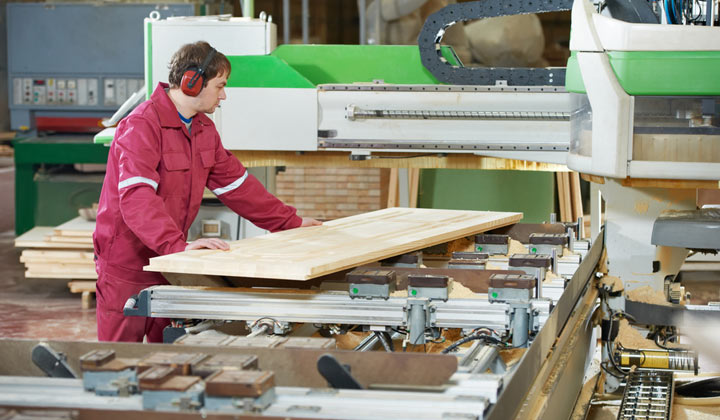
A company might purchase rough lumber because its price per board foot is lower. But the material still needs to be surfaced, ripped, moulded, sanded, or otherwise processed. That requires machinery, tooling, employees, floor space, material handling, and production time.
For some companies, performing those operations internally makes perfect sense. For others, purchasing lumber that has already been processed closer to the required dimensions can reduce overall cost even though the material appears more expensive on the invoice.
J. Gibson McIlvain operates its own millwork facilities and can supply rough lumber or process material into specific sizes and profiles. That creates an opportunity to evaluate where machining can be performed most efficiently rather than assuming that buying the least-processed material will always produce the lowest cost.

Freight Changes the Economics Too
Lumber has weight and volume, and moving it costs money. If a project requires finished components but a customer purchases considerably more rough material than will ultimately be used, some portion of the freight expense is effectively being spent transporting future waste.
There can therefore be value in considering processing and yield before material travels to the final destination.
Freight also becomes important when comparing suppliers located at different distances or when multiple deliveries are required because the original order did not produce enough usable material. A slightly cheaper lumber quote can lose its advantage quickly if another shipment must be purchased and expedited because actual yield fell short.

Inconsistent Material Can Disrupt Production
For a professional manufacturer, the costliest lumber may be lumber that interrupts production. Employees, machinery, schedules, and customer commitments are built around having suitable material available when it is needed.
If an order arrives and doesn’t meet the project’s actual requirements, the consequences can extend beyond wasted wood. Production may slow. Employees may need to be reassigned. Additional material may need to be sourced. A project shipment could be delayed. Installation schedules can be affected.
In a commercial environment, predictability has financial value. This is why a consistent lumber supply can be worth considerably more than continually shopping for whichever supplier happens to quote the lowest board-foot price on a particular day.

Mahogany Is a Good Example of Why Details Matter
The term “Mahogany” itself demonstrates why purchasing hardwood requires more than comparing numbers. Genuine Mahogany, African Mahogany, Sapele, and other woods commonly considered alongside Mahogany are not interchangeable products. They have different characteristics, availability, appearance, working properties, and price structures.
Even within a particular species, the ideal lumber depends upon the application. A manufacturer producing architectural windows may prioritize different characteristics than a furniture company. A millwork shop producing long mouldings may evaluate boards differently from a company producing smaller cabinet components.
Sometimes Genuine Mahogany may be exactly what the project requires. For another project, African Mahogany, Sapele, Utile, or another species may provide the desired appearance and performance while creating a better overall value.
Species substitution should never be based solely on which wood has the lower board-foot price. It should be evaluated in terms of the entire finished product.

The Cheapest Board Can Produce the Most Expensive Part
This is ultimately the problem with evaluating hardwood entirely by purchase price. The customer isn’t really buying board feet. The customer is buying doors, windows, cabinetry, furniture components, mouldings, exterior trim, architectural millwork, decking. Or some other finished product that must be manufactured from those board feet.
Once lumber enters production, its true economics begin to emerge. Material cost + waste + labor + drying + machining + freight + replacement material + production delays all contribute to the actual cost of the finished component.
Suddenly a difference of a few cents or even several dollars per board foot may be much less important than it originally appeared.

A Good Lumber Supplier Should Ask What You’re Building
One of the most valuable things a lumber supplier can do is ask questions.
- What are you making?
- What finished dimensions do you need?
- How long do the clear cuttings need to be?
- Does color matching matter?
- Will the lumber be used indoors or outdoors?
- Are you machining it yourself?
- What moisture condition does the application require?
- How much overage have you included?
- Would another grade, dimension, or species improve yield?
These aren’t unnecessary complications standing between the buyer and a price quote. They are the questions that can determine whether the quoted lumber actually represents good value.
J. Gibson McIlvain has supplied domestic and imported lumber since 1798 and maintains millions of board feet of hardwood inventory. The company’s role extends from sourcing and importing to drying, lumber selection, milling, custom architectural millwork, and nationwide delivery.
That breadth of experience matters because reducing lumber cost isn’t always about finding a cheaper board. Often, it is about finding a better-fitting board.

Calculate Value at the Finished Product, Not the Lumber Rack
Price per board foot will always matter. Material budgets are real, and no responsible buyer should ignore them. But board-foot price should be treated as one variable within a much larger equation.
Before deciding that one lumber quote is cheaper than another, consider how much usable material the order is likely to produce. Consider board dimensions, grade, moisture condition, consistency, machining requirements, labor, freight, waste, and availability.
Most importantly, consider what happens after the lumber leaves the supplier. The true cost of lumber isn’t what you paid for each board foot. It is what you ultimately paid for the usable wood that became part of the finished project.
For professional buyers, understanding that distinction can transform lumber purchasing from a price-shopping exercise into genuine value engineering.
Editor Note: A; C.