In high-end woodworking and construction, few conversations seem as routine as ordering lumber. A buyer calls in, names a species, specifies a grade, gives a board-foot quantity, and asks for a quote. On paper, it appears efficient. In reality, it often leaves critical details unspoken.
For yacht builders, architectural millwork firms, door and window manufacturers, furniture makers, and luxury home builders, wood is not a commodity input – it is the visual and structural foundation of the finished product. When expectations extend beyond structural integrity to include color harmony, grain continuity, and long-term performance, purchasing lumber becomes a strategic process rather than a transactional one.
Suppliers like J. Gibson McIlvain Co. have built their reputation on understanding that distinction. Because when the only specification discussed is grade, costly misunderstandings are almost inevitable.

A Grade Is a Starting Point – Not a Guarantee
Industry grading systems were created to bring order and consistency to lumber markets. Standards such as FAS or FEQ provide a framework for evaluating board quality, focusing largely on clear cutting yield and structural characteristics.
However, grading rules are intentionally broad. They do not account for:
- Exact grain orientation requirements
- Heartwood-to-sapwood ratios
- Tight color uniformity across an entire job
- Sequencing for panel matching
- Project-specific machining allowances
In other words, a shipment can meet “top grade” standards and still fall short of your project’s aesthetic expectations.
For companies producing high-visibility finished goods – whether it’s a custom yacht interior or a boardroom table – this gap between grading language and practical reality can translate into material waste, rework, or even strained client relationships.

Begin with the End in Mind
Before a single board is selected, the most important question is simple: What is this wood becoming?
A Teak deck exposed to saltwater and sun faces entirely different performance demands than a climate-controlled executive office lined with African Mahogany hardwood paneling. The intended use influences nearly every variable in the supply chain:
- Moisture content targets
- Stability requirements
- Grain orientation preferences
- Length and width tolerances
- Surface preparation expectations
When suppliers understand the application, they can guide buyers toward material that aligns with both technical performance and aesthetic intent.
Without that conversation, assumptions fill the gaps – and assumptions are expensive.

Grain Selection: Where Function Meets Design
Grain orientation plays a central role in both stability and visual character.
- Rift-sawn lumber offers linear grain and consistent appearance.
- Quarter-sawn boards enhance dimensional stability and display distinctive ray patterns in certain species.
- Flat-sawn cuts maximize yield but create bold cathedral patterns that may disrupt uniform design schemes.
Standard grades do not differentiate between these cuts unless specified. If your design calls for straight, uninterrupted grain across a series of panels or doors, you must articulate that need clearly.
Sorting for grain consistency reduces yield, which increases cost. But failing to specify grain orientation often results in shop-floor culling – an even more expensive outcome.

Heartwood Content: Beauty & Durability
In many premium hardwood species, heartwood carries both the desired color and enhanced durability. Sapwood may contrast sharply in tone or lack the same resistance properties.
Yet grading systems generally evaluate boards based on clear cuttings, not heartwood percentage. A board can qualify as high grade while still containing sapwood that disrupts the visual continuity of a finished project.
For manufacturers of luxury doors, yacht interiors, or statement furniture pieces, specifying “all heart” or a minimum heartwood percentage may be essential. Clarifying that expectation early allows the supplier to sort accordingly and provide accurate pricing based on real-world yield.
Color Consistency & Natural Change
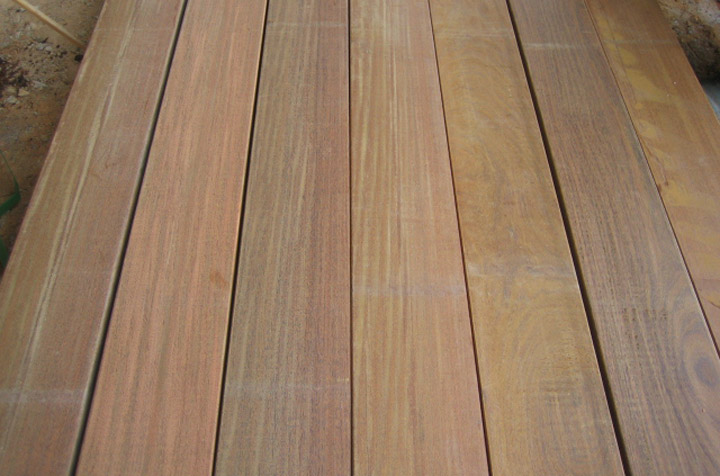
Wood is dynamic. Many species undergo significant color transformation after milling. Teak, Mahogany, and Cherry are well-known for darkening or enriching in tone as they oxidize or are exposed to sunlight.
This creates a unique challenge for projects requiring tight color matching.
Boards selected fresh from the mill may appear inconsistent initially but harmonize over time. Conversely, boards that look similar today may age at slightly different rates depending on grain density and exposure.
If your project demands visual uniformity – particularly in large-scale installations – consider whether additional lead time is required for color stabilization. Communicate whether boards will be pre-exposed to light, finished immediately, or allowed to mature naturally.
Color control is rarely achievable through grade alone. It requires intentional planning.

Dimensions, Yield & Realistic Expectations
Long, wide, clear boards are prized – and scarce. The more restrictive your size requirements, the greater the impact on yield.
For example, requiring every board to be a minimum of 12 feet in length dramatically narrows the available pool. If clear faces must extend the entire length, yield drops even further. The result is higher cost per usable board foot.
A more flexible specification – such as allowing nested lengths or defined cutting multiples – can significantly improve efficiency without compromising final results.
Discussing cut lists and fabrication plans with your supplier may reveal opportunities to optimize dimension requirements. The goal is not merely to purchase lumber, but to purchase usable lumber.

Waste: The Hidden Cost Center
When lumber arrives at your facility, any board that does not meet your expectations effectively becomes waste – even if it technically meets grading standards.
This waste can manifest as:
- Boards rejected for inconsistent color
- Sections removed due to grain variation
- Pieces trimmed to accommodate length restrictions
- Material set aside due to sapwood content
Each rejected portion represents not only lost material but also labor time spent sorting and reprocessing.
By aligning expectations with your supplier before shipment, you shift that sorting process upstream – where it can be managed more efficiently and transparently.

The Role of Experience in Premium Projects
Species-specific knowledge matters. Not all Mahogany is identical. Teak varies by origin and growth conditions. Even within a single species, differences in density, figure, and coloration can be substantial.
An experienced supplier brings more than inventory – they bring perspective. They understand which forests yield longer clear lengths, which cuts stabilize best in marine environments, and how seasonal supply fluctuations affect availability.
Working with the established hardwood specialists at J. Gibson McIlvain Co. provides access to that accumulated insight. Rather than reacting to problems after delivery, proactive consultation helps avoid them entirely.

Communication as a Competitive Advantage
In today’s market, end clients expect flawless execution. Whether the final installation is a superyacht salon, a luxury retail storefront, or a private estate library, visual perfection is often assumed.
Meeting those expectations requires more than checking a grade box. It requires clarity about:
- Application environment
- Aesthetic priorities
- Tolerance for natural variation
- Timeline for color stabilization
- Acceptable waste percentages
Suppliers should ask detailed questions – and buyers should welcome them. These conversations may reveal constraints or limitations in the market. In some cases, they may prompt design adjustments before production begins.
Such transparency protects everyone involved.

Investing Upfront to Protect the Outcome
Yes, tighter specifications often carry higher initial cost. Sorting for color, selecting for heartwood, or restricting grain orientation reduces yield. But the alternative – absorbing waste, reordering material, or disappointing a client – can be far more expensive.
For businesses operating at the premium end of the market, lumber procurement is not an area to economize blindly. It is an area to manage strategically.
When expectations are clearly defined and aligned with supply realities, projects move forward smoothly. Production schedules remain intact. Installation teams work with confidence. And clients receive exactly what they envisioned.

Elevating Lumber Buying to a Professional Discipline
The hardwood industry has long relied on grading systems to facilitate trade. Those systems remain valuable – but they are only the beginning of a larger conversation.
For companies whose reputation rests on craftsmanship, buying lumber should be treated with the same precision as design and fabrication. It should involve detailed specifications, collaborative planning, and realistic budgeting.
The lumber experts at J. Gibson McIlvain Co. understand that their role extends beyond supplying boards. They serve as partners in helping builders and manufacturers translate raw material into refined, high-performance products.
In the end, successful projects are not determined solely by species or grade. They are shaped by informed decisions, clear communication, and a shared commitment to excellence – starting with the very first log selected for your build.
Editor Note: A; C.